
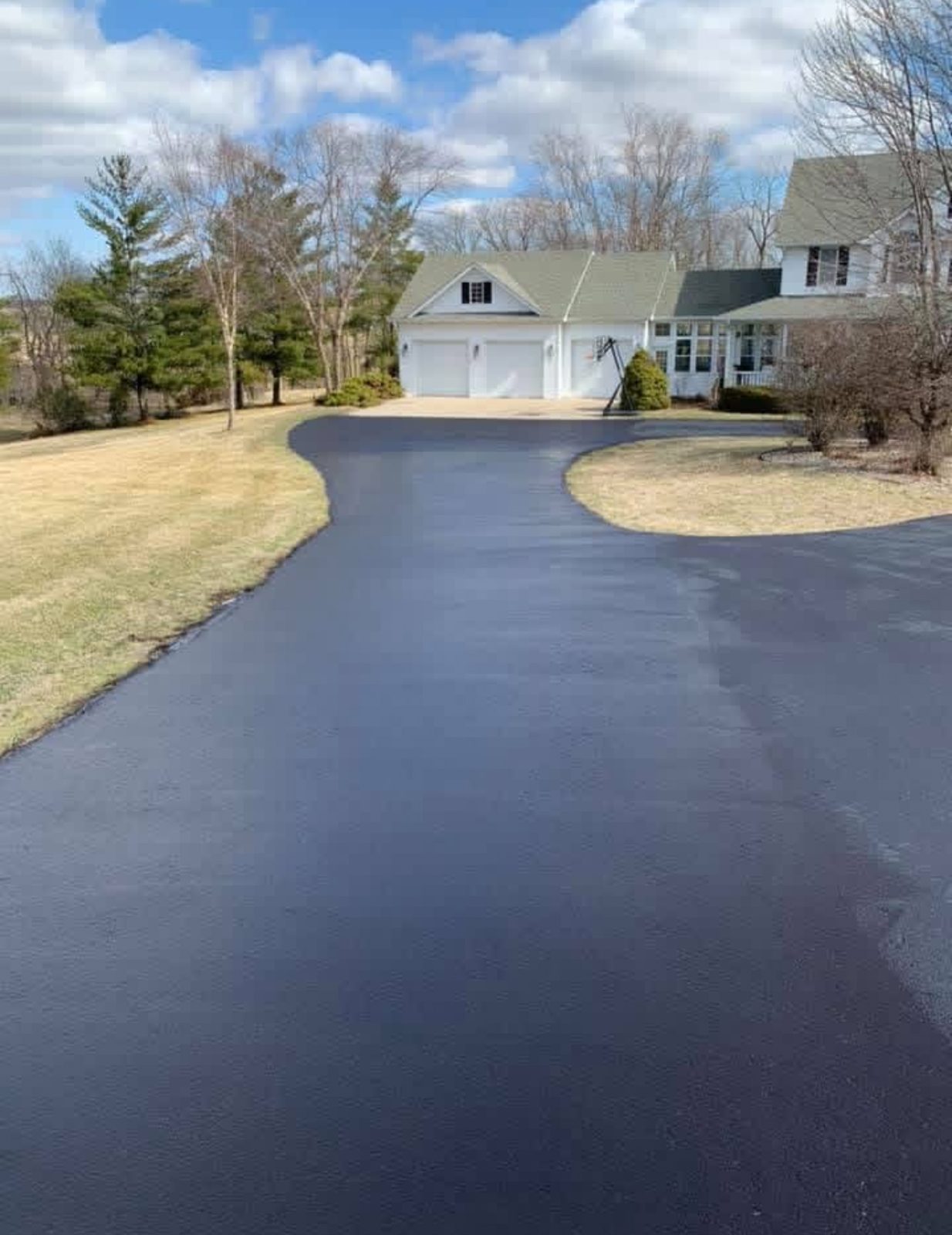
Residential asphalt in Hannibal, MO and Quincy, IL
Driveways that drain right and hold up to real use.
New driveways, gravel-to-asphalt conversions, replacement, repairs, sealcoating, extensions, and the grading and drainage work that makes all of it last.
Residential services
What we do at homes and rural properties.
Most residential asphalt problems come down to two things: water and base. A driveway that sheds water and sits on a compacted base will outlast one that was simply paved thicker. That is where we start, whether the project is a brand new drive or a repair on one that has been in the ground for twenty years.
New driveway paving
Full driveway installation on a graded, compacted base with drainage planned before anything is laid.
Gravel-to-asphalt conversion
Reworking an existing gravel drive into a paved surface, including shaping and compaction of the existing material.
Driveway replacement
Removing or rebuilding a driveway that has reached the end of its life instead of patching it another season.
Repairs and crack filling
Potholes, cracks, edge crumbling, and settled areas addressed before water gets any further into the base.
Sealcoating
Protective coating on a sound surface, with cracks treated first, to slow weathering and restore a clean finish.
Extensions and parking pads
Widening a drive, adding turnarounds, or building a pad for extra vehicles, trailers, or equipment.
Grading and dirt work
Reshaping the ground so water runs off the surface rather than sitting on it or running under it.
Drainage correction
Fixing the low areas and slopes that cause the same section to fail over and over.
Repair vs replacement advice
A straight assessment of whether your driveway is worth repairing or whether you are throwing money at it.
Repair or replace
How to tell which one your driveway needs.
You do not need to guess. These are the signals we look at when we walk a residential property.
Repair is probably enough
- A few isolated cracks or one pothole
- Surface is firm underfoot everywhere else
- Water runs off rather than pooling
- Edges are intact except in one spot
Replacement is the better value
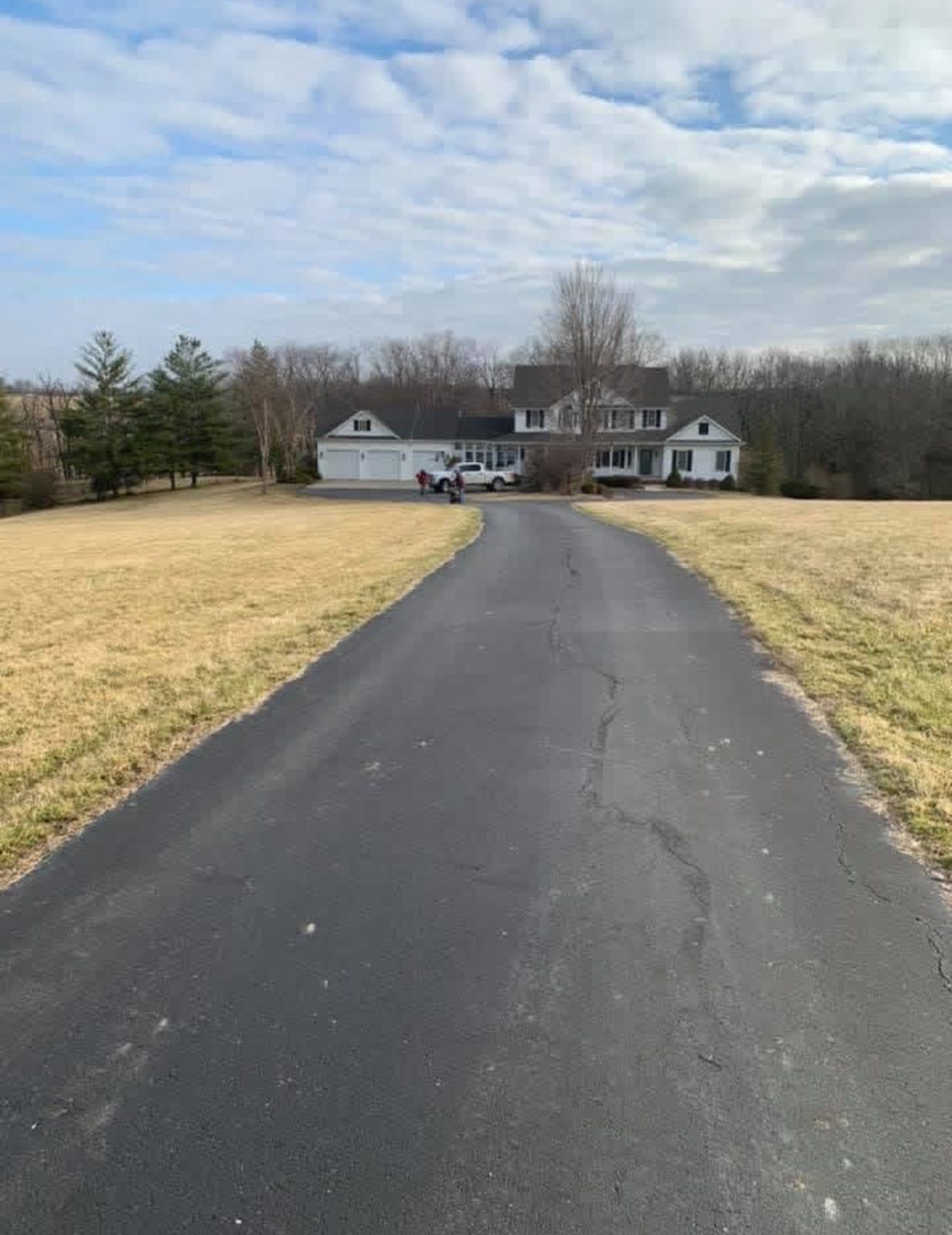
- Cracking spread across the whole drive
- Areas that feel soft or move under a vehicle
- Repeated failures in the same low spots
- Patches from previous years already failing
Service details
Go deeper on any of it.
Homeowner questions
Residential asphalt FAQs.
If you need something specific, call or text us and we can talk it through.
Can my gravel driveway be converted to asphalt?
Usually yes. The existing gravel needs to be graded, shaped for drainage, and compacted so the new asphalt has a stable base. We look at the depth and condition of the existing material first.
Should I repair my driveway or replace it?
If the damage is isolated and the base is still solid, repair is the better value. If the surface is breaking up in several places or the base is soft, replacement usually costs less over time than repeated patching.
How do I know if drainage is the real problem?
Standing water after rain, moss or silt along one side, and repeated failures in the same low spot all point at drainage rather than the asphalt itself. That gets corrected during grading, not with a patch.
Do you sealcoat residential driveways?
Yes. Driveway sealcoating is common work for us, usually with crack filling done first so water is not sealed into the base.
Can you widen my driveway or add a parking pad?
Yes. Extensions and parking pads are handled the same way as a new driveway: grade, prepare the base, then pave and tie the new area into the existing surface.